
Ask yourself this: Do you feel nervous if your phone is not in your hand or within sight? Do you find yourself wishing you were more creative or had more time in the day to spend on your passions or connecting with friends and family? Do you spend more time with your phone than any other person in your life?
If you answered yes to any of these questions, then chances are you are addicted to your smartphone! And, three months ago, I would have answered yes to all those questions. My phone was an extension of my hand, a crutch that I had with me from the moment I woke up to the moment I went to sleep, that I could use anytime I was anxious or bored with the world around me.
My addiction started slowly. I began to input more parts of my life into my phone, increasing the time I spent on it. It became my camera, my calculator, my calendar. It was my budget book, my newspaper, my alarm clock. My entertainment, my bank, my weatherman. I started studying with my phone next to me, unknowingly taking a break every ten minutes to check my notifications, disrupting my concentration and recall of the information I was learning. I found myself opting to scroll through TikTok instead of a book before bed. Before I knew it, two hours would go by, pushing my bedtime later and later, affecting my sleep. And from my sleep-deprived, distracted state, at the end of the day, all I wanted to do was just curl up in bed and be on my phone, instead of spending time with friends or reaching out to family. The worst part was, even though I hated how much I depended on my phone, and I wished I could stop, I just couldn’t on my own.
And it wasn’t my fault. Smartphones are specifically designed to addict us by releasing dopamine, a hormone that makes us feel good. It makes us feel so good that we engage in the dopamine-releasing activity more and more often until we are addicted. App developers know this and use algorithms to predict your phone patterns, choosing just the right moments to give you that dopamine hit, keeping you hooked to your screen.
The Problem
On average, we spend 4 hours on our phone each day. That is 28 hours a week, 112 hours a month, or 56 full days a year: the same time commitment as a part-time job. Our phones are usually the first thing we look at in the morning, the last thing we check before going to sleep, and everything else in between. They are an extension of ourselves. The average person checks their phone 47 times a day, which increases to a whopping 82 times a day for 18–24-year-olds. We are glued to our phones, tempted to use them anytime we have a break, such as playing games in a waiting room, returning texts while out with friends, or watching a video on the bus, ignoring the real world.
The Solution
Three months ago, I was at the point where I was threatening to get an old fashion flip phone to force myself to break my addiction. Recognizing that all I needed was to adopt some better phone hygiene, my mom gifted me a book that had changed her life and now it has also changed mine.
It’s a pocket-size paperback called, “How to Break Up with Your Phone: The 30-Day Plan to Take Back Your Life,” by Catherine Price. And, before you ask, no it is not available as an e-book!
In the book, Price discusses the ways in which smartphone use has affected the mental health, attention levels, and abilities of newer generations and offers a 30-day program to “Break-Up” with your phone and get your life back.
The book is a quick read. But don’t worry, if you don’t feel like reading a whole book today, I will be that best friend that supports your break-up by summarizing the most important takeaways from the book and offering the best 7 tips that have helped me to have a healthier relationship with technology.
Smartphone use has been scientifically proven to affect our brain in 3 key ways: our attention spans, memories, and sleep patterns.
Attention Spans
The ability to be distracted has an evolutionary purpose; those who were able to notice changes in their surroundings and react accordingly to threats had a higher chance of survival. However, distraction by our phones is a lot more disruptive to our lives in the present. Picture reading a book vs. reading a text on the internet. When you read a book, distractions only come from the outside world, maybe the light changes outside your window or someone shouts from another room. But when you a read a body of text online…
Hold on. I just have to respond to a text.
Ok, I am back.
When you read a text online, there are ads, links, and flashing images that compete for your attention, draining your focus and causing you to be distracted more easily. See how easy that was?
Memory
Constant smartphone use also affects our long and short-term memories. Our short-term memory is our recent memory. It reminds us that we are looking for our wallet or that someone just rang the doorbell. When our phone dings while we are trying to complete a task, it interrupts our short-term memory from retaining the information in our present reality. And even more, short-term memory eventually becomes long-term memory. Constant phone use disrupts this transformation.
Sleep
Phone use can affect our sleep patterns in a variety of ways. Scrolling through social media before bed causes you to have lots of conflicting emotions. Posts or videos can make you feel happy, then sad, anxious then excited, disrupting your emotional state and feeling of calm, making it difficult to fall asleep. They also emit blue light, a frequency of light that tricks your brain into thinking that it is daytime, inhibiting melatonin production (the sleep hormone) and making it harder to fall asleep. When you are sleep-deprived, your attention span, motivation, and mental health can be further negatively affected.
My Suggestions
The book offers a 30-day program to “Break-Up” with your phone. I have combined the best strategies from the book with my own to offer some quick tips & tricks to regain your independence from your smartphone and improve your attention spans, memory, sleep pattern, and relationships with others.
- Get an alarm clock. Now you won’t have an excuse to keep your phone by your bed. Keep it in the other room, even. I also try to turn it off 30 minutes before I go to sleep and wait 30 minutes in the morning before going on it, to protect my sleep.
- Print out hard copies of text if you really want to absorb information. Avoid distraction from ads and links and pop-up notifications so you can concentrate.
- Delete social media apps. Don’t worry. You can still access most social media apps on your computer. But this allows YOU to be in control. You can interact with social media when you choose to, not when a notification tells you to.
- Practice non-social distancing. Heading out for a hike? Leave your phone in the car. Going to the grocery store, leave your phone at home. Heading to the bathroom? Leave your phone in the other room! Practice getting comfortable with creating physical distance between you and your phone, so you can think and just be on your own.
- Deepen your relationships by cutting out the third wheel, your phone. When you are with others, keep your phone on airplane mode and out of sight. Tell your friends what you are doing and maybe they will also follow suit. This will allow for more intimate and uninterrupted conversations and connections with others.
- Delete all non-essential apps. Let’s face it, the world we live in is set up with the assumption that you have a smartphone. Vaccine passports, navigation, the internet; they are all in your pocket. Your phone offers essential tools for you to move through the day smoothly. But all the rest of the applications are just a time suck, distracting you from the real world around you. Be brave and delete those apps that you usually reach for when you are bored, anxious, or lazy. You will be surprised with what other, more fulfilling activities take their place.
- Remind yourself what you do for fun. What were you passionate about before you had a smartphone or what areas of your life do you wish you had more time to nurture? Cutting down your phone use will leave you with a lot more hours in the day to yourself. If you are not prepared with other self-care activities to take the place of those hours, you will be left feeling bored and will be compelled to go right back to your phone, with arms wide open.
Adopting these tips has changed my life. My screen time has drastically decreased. I have more time to nurture my creative passions and practice self-care without an app to scroll through. I am using my brain for critical thinking instead of reaching for google without a thought. And most importantly, I am having deeper connections with my friends and family, uninterrupted by dings and pings. Since have I broken the addiction, I no longer have a compulsive need to have my device glued to my hand. I am free. I have even gone a whole day without checking my phone, simply because I forgot to turn it on, and you can too!
Ok, take a breath. I know that change can sound scary. The biggest thing that holds us back from making these changes is FOMO: the Fear of Missing Out. We do not want to miss out on updates on our friends’ lives, important notifications, or breaking news. However, think about the more important things we are missing out on in the real world by being glued to our phones. A missed connection at a bus stop while you were responding to a text, a baby bunny outside the window, as you play a game on your phone in a café, or the chance to observe a joyful reunification of friends at the ferry terminal while you scroll through Instagram. We are already missing out on so much. So the question is, what would you rather miss out on, an abstract network of likes and removed connections or real life and real relationships?
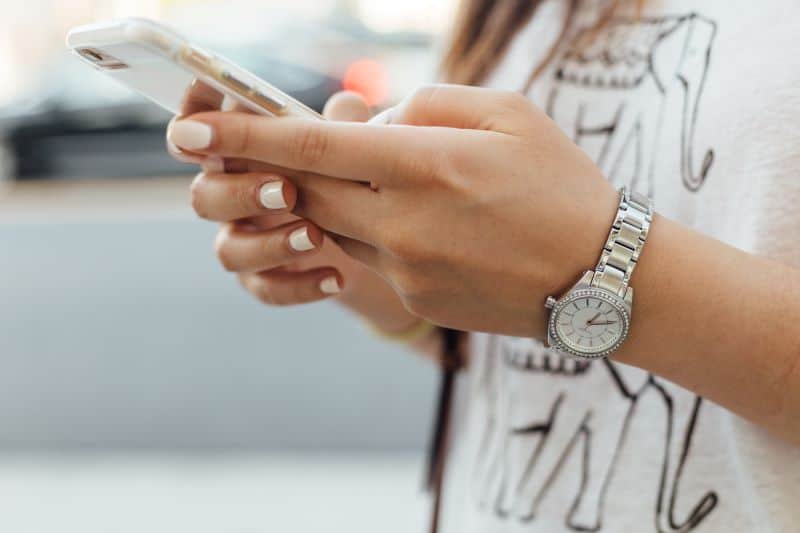
Photo by Paul Hanaoka on Unsplash
Supporting Rural Youth at The Circle
Check out all of the programs The Circle has to offer. Our programs are built around the core principles of SEL to work towards safer communities.
- We offer the Empathy Project for Grade 3, 4, and 5 students to provide them with the building blocks of social–emotional learning.
- For Grades 6, 7, and 8, the Respect Project offers students the opportunity to get to know one another better and learn about the foundational role respect plays in their lives.
- The Pass It On program is an after-school, cross-peer group mentorship program with intermediate students (as buddies) and high school students (as mentors). Its goal is to foster capacity for healthy relationships and support life transitions.
Our programs have successfully offered students the wide range of benefits of a social–emotional education. After attending our programming, students have expressed a greater capacity to feel empathy for others, to resolve conflict, and to build equal and healthy relationships. Teachers observe students using their new skills in the classroom, and they request our programs year after year.
Learn more about our programs or request more information about how you can bring our programs to your classroom or organization.
 .
.
Adele Mark is a third-year undergraduate student studying Sociology and Global Development Studies at the University of Victoria. She was involved in the Pass It On program in high school at Gulf Islands Secondary School and was hired as Marketing and Communications Assistant, a temporary student position in early 2021, at The Circle. Adele has been involved with several projects that focus on youth education and female empowerment and looks forward to continuing this work with The Circle.