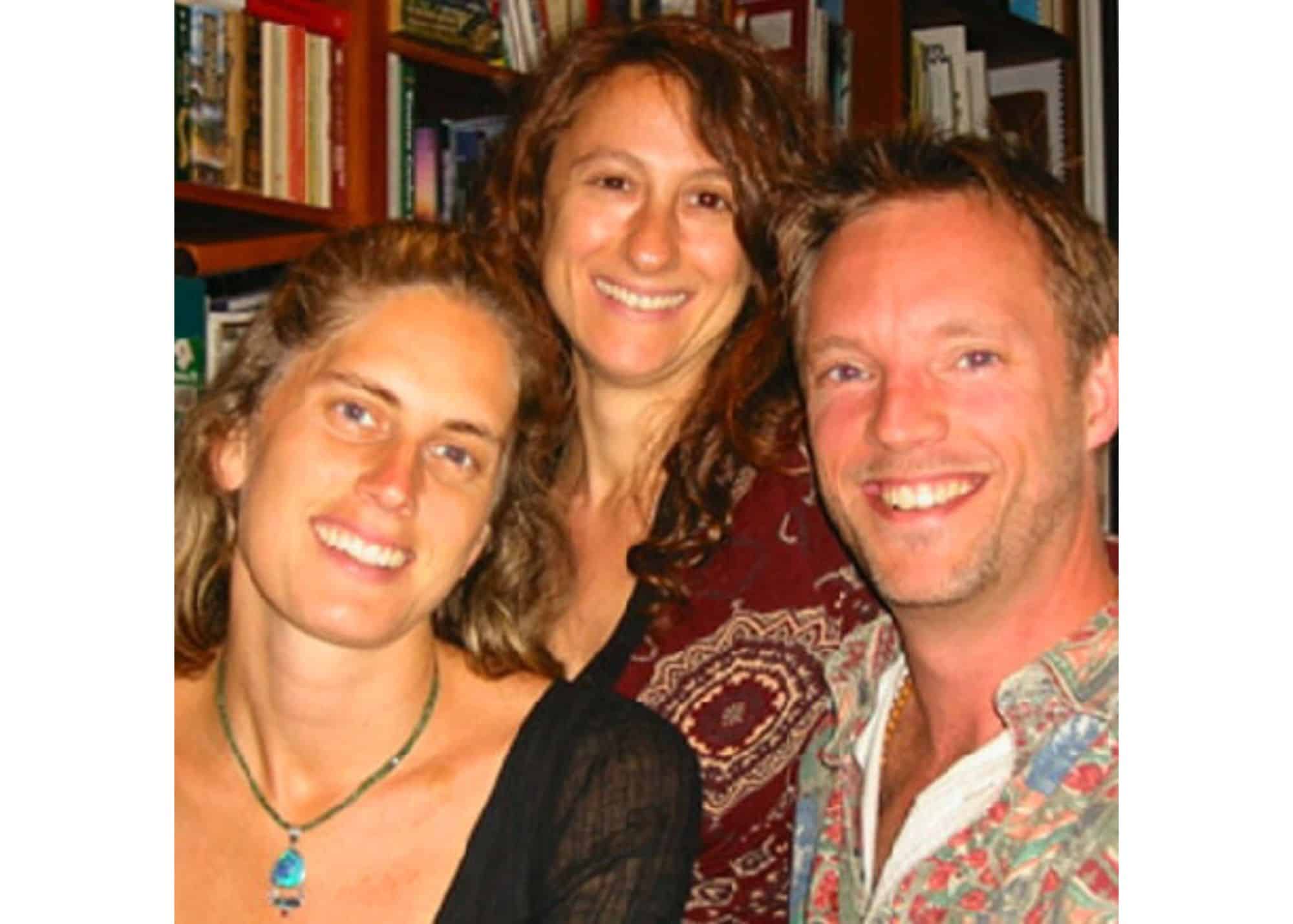

Adele Mark, Education Outreach Program Coordinator, at The Circle interviewed Gail Bryn-Jones, a dedicated advocate of social-emotional education and teacher of over 30 years on Salt Spring Island. Gail has a master’s degree in Education and has served as a board member of the Salt Spring Conservancy and The Circle Salt Spring Education Society.
Adele Mark: My first question for you is, what do you do and what is your connection to The Circle?
Gail Bryn-Jones: I am an elementary school teacher on Salt Spring Island. I’ve been teaching in the school system here since 1987. I have had The Circle’s programs in my classroom for the last 5 years now and I am also a member of The Circle’s board of directors. Before that, my most relevant history was with the Virtues Project. For those who are unfamiliar, the Virtues Project started with a family who wanted to be of service to the community. They compiled a list of 52 characteristics that describe what it is to be a good person, such as curiosity, assertiveness, determination. The hope was for families to teach one virtue a week for a year to their children to replace things like “nice girl” or “bad boy” with a better vocabulary of positive “virtues.” It’s expanded into classrooms, prisons, workplaces, churches, and all around first nations communities. I was involved in copy editing and proofing the original Virtues Project guide and I was very involved in facilitating workshops. Those are the two bits of my bio that relate particularly well to social-emotional learning and teaching.
AM: I am glad you mentioned that. For those who are new to social-emotional learning, could you explain what it is and why it’s important? What is your own personal connection to social-emotional learning?
GBJ: Social-emotional learning in the school context is where we address the children and their affective side. How they are feeling affects how they can learn and how they can participate. If you look at the two words social and emotional, there’s a lot that humans need to know about how to take care of themselves emotionally but also how to integrate with others emotionally.
GBJ: When you think about what contributes to students’ success, it’s just as much intellectual capability as it is their social confidence, respect for each other, and respect for themselves. How much we value ourselves is a direct contributor to how well we do out in the world. More and more, it seems like socialization rules that families could and should be teaching are not happening in some homes and so we have to make up for it at school. Finding ways for kids to feel good about themselves has always been the most important thing about my teaching job.
AM: It is interesting that you said that. I think that is something really special that a lot of teachers on Salt Spring give to their students. When I moved here in Grade 10, I was so surprised and humbled by how much the teachers were interested in how I was feeling outside of what they were teaching me.
GBJ: Absolutely. It’s taken a while for the curriculum to catch up to what teachers have known for a long time, and then it’s taken a while for a new generation of teachers to really give it time in the classroom. As teachers, we’ve always had to guard our time so that we don’t run out of time to teach math or reading. We often don’t want to bring in anything else, yet we have to look at how important social-emotional learning is. Kids have to feel good about themselves before they can really maximize their learning.
AM: Switching gears a little, I know that you raised children on the island. As a parent, what are the biggest challenges of rural living for youth that you have noticed, and how can social-emotional learning help with those challenges?
GBJ: It’s interesting that you put it as a challenge. I think if you asked my children about being raised in this rural situation, I think that they would both say that there are very few things that they feel like they missed in their childhood. If anything, the one thing as a parent I feel that they miss is exposure to a diversity of people. We are fairly monocultural. Hang on a second. My 28-year-old child would like to add something.
Gail’s son, Arlo [from the background]: Yes, exactly! Oh, exactly that.
GBJ: He agrees that the lack of diversity is the shortfall of this community. In a way, I think that they had a very safe, almost gentle, place to grow up. That has contributed to them feeling like they can embrace the rest of the diversity that they didn’t necessarily get exposed to. When the kids were little, we could go to a community event and, if for some reason something happened and I needed to leave, there would be a dozen people at that event that I could say to, “Hey, could you take the kids?” That kind of security where there are community people caring for children, allowed them to develop their social understanding in a really safe way. For me, the good things outweigh the challenges.
AM: I would agree that my experience growing up on Salt Spring has been mostly positive. I always thought that my positive experience was because I already had lived in a big city, but I know that some of my friends really struggled with the isolation. So, many of them were ready to leave and not ever come back after graduation.
GBJ: Of course, that makes sense. When we grow up only knowing one certain way, we want to learn about other parts of the world. But our basic values don’t disappear just because we’re going to experience other things. The confidence-building that has happened in those first years on the island while also learning about their social-emotional well-being helps kids move on and find those new experiences. Otherwise, it is kind of a big scary world out there. It all traces back to that early social-emotional learning.
AM: My next question is, what tips would you give to parents to support social-emotional learning at home? What would you say to a parent who is struggling with homeschooling either full-time or when their child comes home from school?
GBJ: Often young parents, especially if they had any kind of strict or restrictive upbringing, tend to go too much in the opposite direction where they give a lot of freedoms to their children too early. I talk about the container that we hold our children in, and that even if it’s a small container, if the edges are well defined, if the boundaries are clear, kids feel cared about. If kids can push those boundaries without facing a consequence or being shown that their parents care, then how will they know how to be without their parents’ guidance? Having a small box with strong boundaries is better than having a large box where the boundaries shift. I see it all the time in the classroom where parents are not clear on what kind of structure they want to give their kids and so rather than leading they are following. Instead, if we try and anticipate the age stages of our children and at least keep up with them, if not lead, then you start to balance freedoms and responsibilities. That helps them build self-respect because we’re showing them respect. We need to show our kids at home that we believe they are capable of meeting a higher standard. Believing in them and showing them that respect with consistent boundaries helps eliminate a lot of the behaviour issues that come up in the classroom later on.
AM: Let’s talk about the Empathy Project, a program offered by The Circle for Grade 3, 4, and 5 students to provide them with the building blocks of social-emotional learning. As someone who has had the program in your classroom for the last several years, can you speak to some of the key takeaways from the curriculum?
GBJ: One of the highlights of this program is that it introduces a lot of language to the kids to show that somebody else cares about them. It encourages kids to care about each other, and it recognizes that it’s important for class time to be given to this work. It gives it a real central stage which elevates in kids’ minds the importance of social-emotional learning.
AM: Have you benefited from social-emotional learning in your own life?
GBJ: One of the reasons that I was attracted to the Virtues Project was because I was pregnant with my eldest. I didn’t know how I was going to compensate for some of the poor parenting styles I had experienced or seen, and so it really suited my heart-mind connection to have something meaningful in my life that speaks to the very core of our humanity. The Virtues Project gave me a platform from which I could parent that matched my values. When The Circle first introduced Peace Kids, now the Empathy Project, I saw it as a program with a similar mission — to bring that social-emotional language and hope to the kids. I immediately wanted it in my classroom. It fit with my values and how I work. Relationship with self and relationship with others is really the most important thing.
AM: What is the most challenging part about teaching social-emotional learning in the classroom?
GBJ: Mostly having to teach other stuff! I do see challenges at times when kids have so little experience with it that they freeze up. I feel that challenge when I haven’t been able to touch someone’s life or when I haven’t been able to bring somebody in. But, in terms of challenges [while] teaching, it’s my language. It’s my way of being, so I don’t feel challenged by it the way I feel challenged teaching history! History is interesting. I like it, but this stuff, social-emotional learning, is just how I roll.
AM: Can you speak to the lasting effects that receiving a social-emotional education has on a child?
GBJ: For kids who relate to the language, who relate to the learning, it’s an affirmation for them that they’ll just keep building on their whole lives. I’d say it’s necessary for everybody, whether they haven’t had it at home and they’re experiencing it for the first time or if they have had it before and they’re having further revelations — a sense of faith or hope that things are going to be okay. Social-emotional learning opens doors to something that is ongoing; it’s the human condition to always want to be better, like wanting to be more considerate or wanting to be more of service to others. Social-emotional education gives children lifelong tools to facilitate that learning and personal betterment.
AM: Thank you, Gail. I really appreciate you talking with me today. You’ve given me quite a few nuggets to think about.
GBJ: You’re very welcome. It’s been lovely to talk to you.
Supporting Rural Youth at The Circle
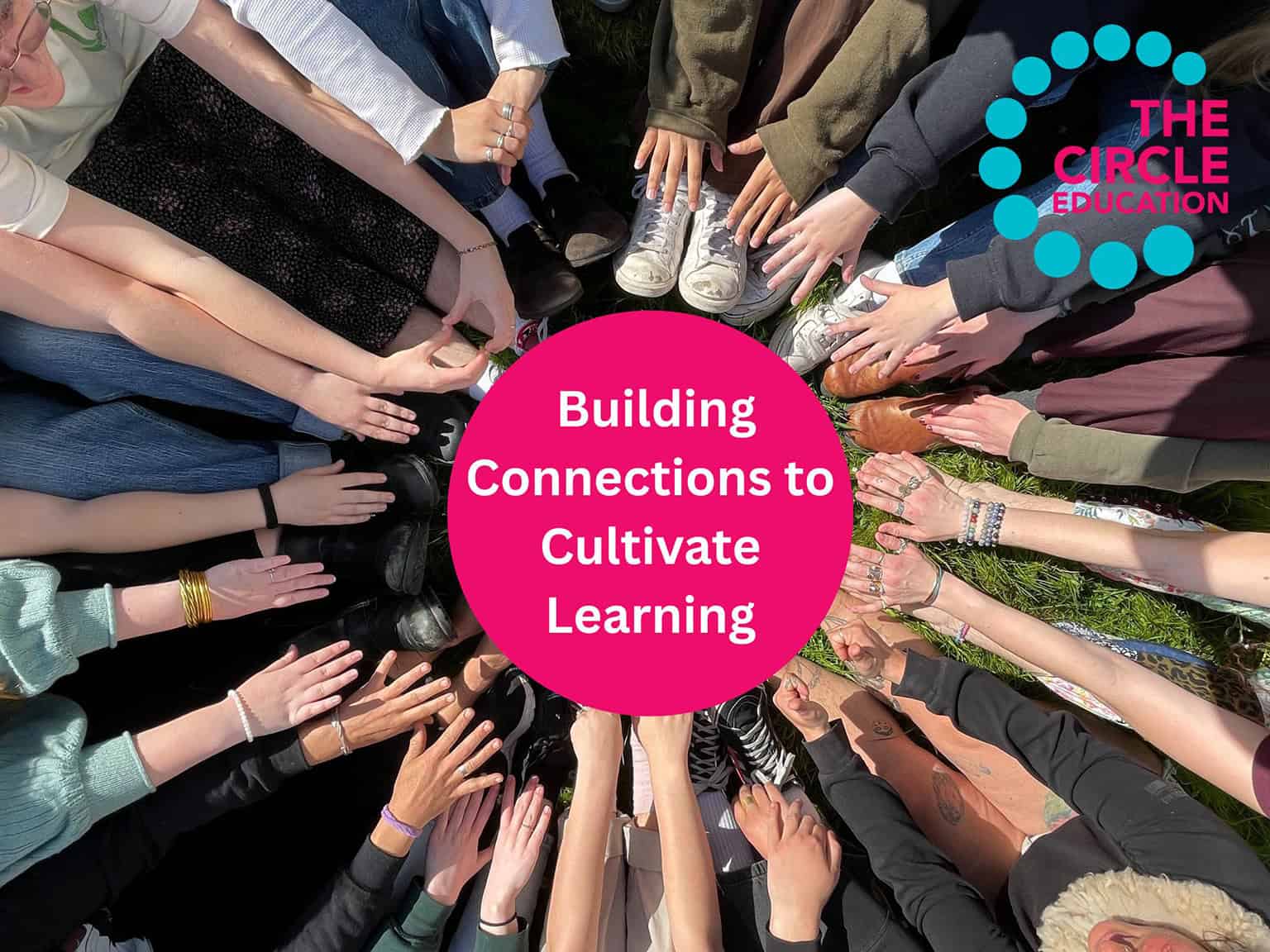
Check out all of the programs The Circle has to offer. Our programs are built around the core principles of SEL to work towards safer communities.
- We offer the Empathy Project for Grade 3, 4, and 5 students to provide them with the building blocks of social–emotional learning.
- For Grades 6, 7, and 8, the Respect Project offers students the opportunity to get to know one another better and learn about the foundational role respect plays in their lives.
- The Pass It On program is an after-school, cross-peer group mentorship program with intermediate students (as buddies) and high school students (as mentors). Its goal is to foster capacity for healthy relationships and support life transitions.
Our programs have successfully offered students the wide range of benefits of a social–emotional education. After attending our programming, students have expressed a greater capacity to feel empathy for others, to resolve conflict, and to build equal and healthy relationships. Teachers observe students using their new skills in the classroom, and they request our programs year after year.
Learn more about our programs or request more information about how you can bring our programs to your classroom or organization.
 .
.
Adele Mark is a third-year undergraduate student studying Sociology and Global Development Studies at the University of Victoria. She was involved in the Pass It On program in high school at Gulf Islands Secondary School and was hired as Marketing and Communications Assistant, a temporary student position in early 2021, at The Circle. Adele has been involved with several projects that focus on youth education and female empowerment and looks forward to continuing this work with The Circle.