
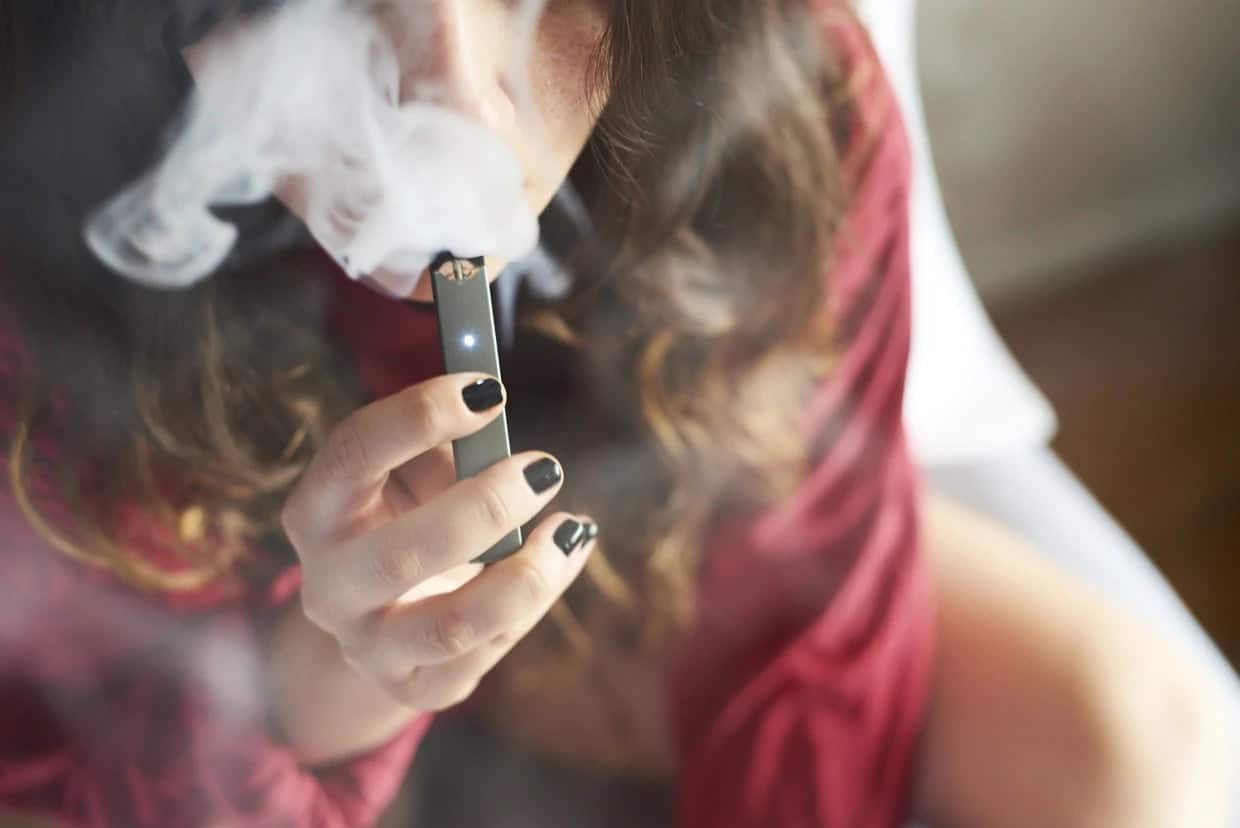
Most teenagers are well aware of the dangers of vaping, but do it anyway. Our student, Sophia Coopman, tried to find out why young people start to, and continue to, vape despite the many health concerns, and how we can encourage youth to make healthier choices for themselves.
Three years ago, my class toured the morgue at Saanich Peninsula hospital. We weren’t shown any bodies, but the smell in the air made it feel as if we were surrounded by death: it was the smell of cigarette smoke. That morning, the mortician had dissected a dead person who smoked for most of his life and died of lung disease. His corpse was in that very room, hidden by steel doors. The presenter showed us pieces of the inside of his lungs in plastic bags on a steel platter - the organs that were supposed to be a healthy pink were instead blackened and charred. The cloying smell of smoke that permeated through the plastic bags has followed me ever since.
If I had any qualms with smoking before, I was certainly scared away after that day. But a lot of the people in my class weren’t. We knew the risks, but many of us still continued to drink, smoke, vape and take other risks related to our health anyway. So, what made us do it? Why do teens smoke, vape and take other risks related to our health, despite knowing the full consequences of those substances on our bodies, and what will help us make healthier choices?
Why do teens vape?
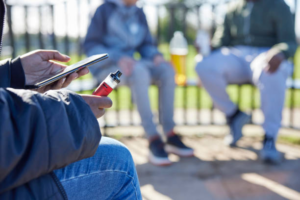
Many youths start vaping because they see it all around them. According to Statistics Canada (2021), peer and family use of vapes increases adolescents’ odds of vaping. In their 2019 report, the Substance Abuse and Mental Health Services Administration (SAMHSA) branch of the U.S. Department of Health and Human Services stated that “a primary concern” is that “many young people view vaping as socially acceptable”. Another SAMHSA study showed that youth indicated that they vaped because their friends, peers, and siblings did. A 2020 study by Truth Initiative, America’s largest nonprofit public health organization, found that youth and young adults with high exposure to popular streaming and TV shows containing tobacco images are three times more likely to start vaping compared to their peers with no exposure. Through advertising, social media platforms, TV shows/movies, in school and many public spaces, youth are constantly seeing other people vaping. This exposure causes youth to see vaping as a ‘normal’ part of the teenage experience, a way to be ‘cool’ and a way to rebel against their parents all at once (SAMHSA).
Kate Nash, facilitator and program coordinator with The Circle Education, asked some local youth about their experiences surrounding vaping. Their answers were similar all across the board. When asked if they knew the consequences of vaping, they answered that they had had lots of information drilled into their brains by their teachers, by admin, and even social media. This shows that Salt Spring youth are not misinformed and that they are well aware of the dangers of vaping, but still do it anyway. What’s more, one youth was quoted as saying: “If an adult tells me not to do something, I’m totally going to do it” and their friends all agreed with that statement.
If warnings from adults only spur young people’s interest in vaping, what would actually make them stop? Peer influence seems to be both the reason why and why not to vape for Salt Spring youth. When asked why they started vaping, one responded “to do cool hacks, and vape tricks, like ‘ghost inhale” as a way to impress friends and people they were into. Others gave similar responses. When asked what would keep them from vaping, other youths answered, “Maybe if my friend died from it” or “maybe if someone I was into didn’t like it”. Having other outlets also seemed to keep some from vaping, as suggested by one youth, “if I had a goal or something to work for I wouldn’t do it”. When asked why they continued, they responded that it helped them focus their thoughts, to relax and because they had become addicted. They knew that they were addicted because they felt “antsy” and they thought about vaping all the time. One youth said, “At first, I didn’t think I was addicted at all, but now I know I am. I just need it”.
How can you help youth in your life make healthier choices?
As a parent, or as someone who has young people in their life, your first instinct may be to forbid or scare your kids away from taking risks or using substances. But, as I know from my peer group’s experience, shocking teens into not vaping doesn’t always work. There is more information about vaping out there than ever before, and yet the rate of youth who vape only continues to rise, according to the latest Canadian Student Tobacco, Alcohol and Drugs Survey (Statistics Canada, 2019). As we learned from our small informal sampling of youth on Salt Spring Island, warnings about the consequences of vaping alone may not be effective. So, in addition to the facts and preventive information, what can we do to help the youth in our lives make healthier decisions?
Kate Nash says that she sees changes towards safer behaviour when youth are simply asked questions around their choices. “Youth are commonly told what not to do, and when bombarded with the adverse effects of vaping, often, they will respond with rebellion. Alternatively, the purpose of The Circle’s programs is to explore through open curiosity the boundaries we push, decisions we make, and how those decisions serve us.” The best way for this to happen is through dialogue.
Here are some tips for having a conversation about vaping or other substances with youth in your life:
● Before you start the conversation, it is important to know the facts about vaping. Here is a helpful link
● Recognize your own values and biases. Try not to project personal feelings of judgment and shame upon the important young people in your life. This may cause them to feel like you are judging them and they may become unwilling to continue the conversation.
● Be prepared to delve into this topic at a developmentally appropriate level. What this conversation looks like to a 15-year-old might be very different for a 17-year-old.
● Sharing your personal experiences with substance use can be a way to connect with youth in your life, however, steer the conversation away from specific examples and focus on the feelings/thoughts around your choices instead of the intoxicants themselves.
● Use “What” questions. “Why” questions often trigger defensiveness. Open the conversation with questions like:
-”What are you hearing about drugs/alcohol/vaping in school?”
-”What are your friends doing? Are they into vaping/drugs/alcohol? What do you think/feel about that?”
-”What would be the worst thing that would happen if you were to start vaping/drinking? What would be the worst thing that would happen if you didn’t?”
● Have your youth think about risks and brainstorm the pros and cons of using substances.
● Encourage the youth in your life to engage in healthy risk-taking instead of using substances as a way to satiate their need to push boundaries. Healthy risk-taking can look like riding roller coasters, rock climbing, trying out for a team or a play, meeting new people, or volunteering.
● As a team, try to land on an agreement around substance use and how to stay safe.
● Lastly, this conversation about vaping can be ongoing. It can be helpful to check-in regularly with the young people in your life about how they are feeling, their thoughts and their experiences around substances.
As Kate Nash explained to me, what is most important about this conversation is that youth are “given the opportunity to safely consider and question their choices around substances so that they can better decide what is right for them”. This may be how we can encourage youth to make healthier choices about substances for themselves. That, and by showing them bits of shrivelled black lungs!