
Today is World Day for Cultural Diversity for Dialogue and Development; a day to celebrate different backgrounds. In the weeks that bookend this important day, The Circle Education is connecting the dots between similarities that blend us together in a shared humanity as well as the differences that allow us to proudly stand out.
Adele Mark moved from Los Angeles to Salt Spring Island when she was fifteen years old: from a melting pot of cultures and religions to a small rural island. With her Jewish background, she was a minority on Salt Spring Island and she even encountered antisemitism. In this blog, she writes how curiosity and compassion can lead to understanding and greater cultural awareness despite differences.
I grew up in Los Angeles, California in a Jewish household. My family wasn’t religious, but our Jewish faith was a part of our everyday life. My mom prepared traditional Jewish foods made with lots of love (and garlic), we communicated through Jewish humour passed down through the generations, and we called each other Yiddish nicknames like Coinela or Tuppelah.
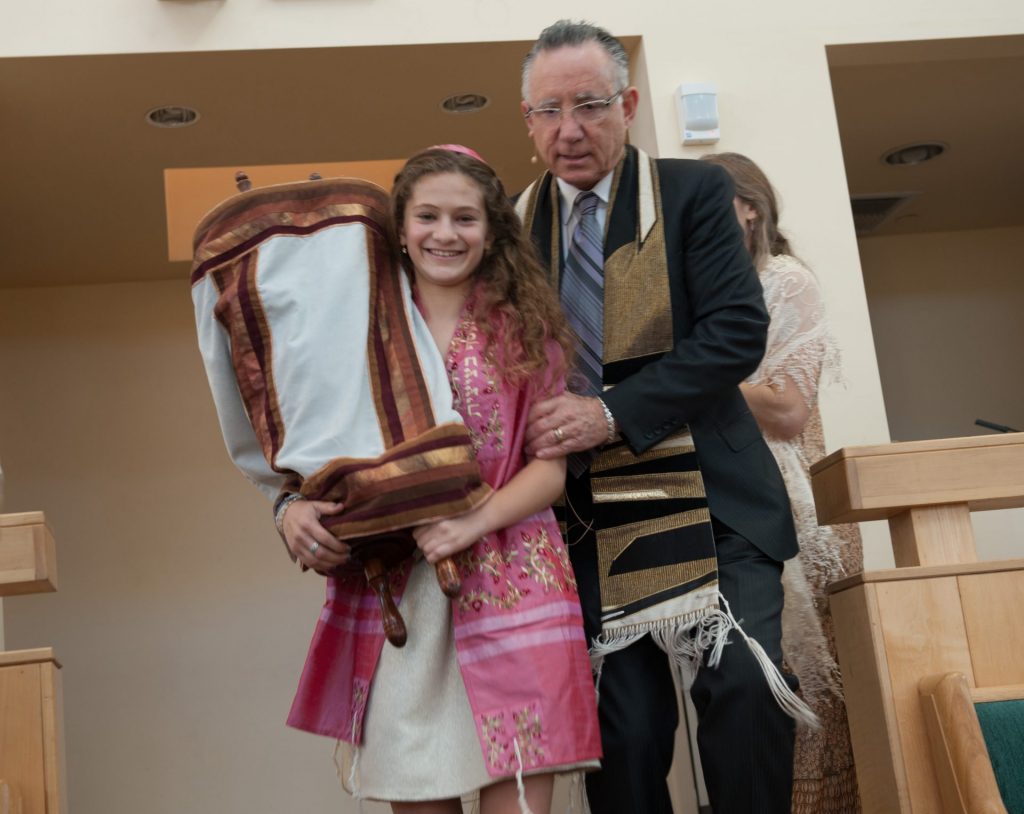
I never knew I was a minority because of the thriving Jewish community in Los Angeles. I went to public school with other Jewish kids. We were given most big Jewish holidays off because the school district knew that half the kids wouldn’t show if they didn’t. Throughout the years, our history classes frequently invited Holocaust survivors as guest speakers to share their stories of intense cruelty and perseverance.
I was surrounded by others that looked like me but also by others that didn’t. “Los Angelenos” have diverse cultures, perspectives, politics, life experiences and races. Our school encouraged us to be curious about these differences and to find comfort in our own identities. I saw my Jewish heritage as something to be proud of, something that made me special. I grew up not knowing the same pain and suffering that my ancestors had endured. To me, antisemitism was in the past.
When I was 15, everything changed. I moved to Salt Spring Island, which was the opposite of everything I had ever known. With time, I learned to love the rural island life, appreciating its beautiful landscape, and immersing myself in its community web.
Over time, I also noticed that there was something missing; the Jews!
For many kids at my new school, I was the first Jewish person they had met. I didn’t mind explaining what Judaism was and what holidays I celebrated, but I wasn’t used to being a novelty. When Christmas came around, the entire school transformed into a red and green wonderland. But there was no mention of Chanukah, the Jewish celebration of light because no one knew it existed.
I wasn’t really bothered, yet. I had always been content celebrating Christmas and taking part in the joy and love that it brought my friends and family. It also helped that by that time, my family had found the small Jewish community on Salt Spring and we celebrated Chanukah with them.
The beginning of Grade 12 was when I first started to notice antisemitism. At first, it took the form of covert microaggressions. A friend would drop a coin on the ground and look to me to pick it up, followed by laughter. I would play along and pick it up, rolling my eyes.
But it got worse. Once, while getting dressed for a shift in the cafeteria, I noticed that there were only the smaller, “less-desirable” chef’s hats left. I heard someone say, “Those suck. They look like those little Jewwy hats. You don’t want one of those.”
I was mortified and sat alone the rest of the shift, quietly crying to myself. I was always up for a joke. But it seemed that the joke was at my expense, violating the cultural significance of our “little Jewwy hats.” I was confused by my reaction and decided to stay silent and move on.
It happened again a few weeks later. I was in Math class when I overheard a boy singing a nursery rhyme. He sang, “We are on the train to Auschwitz. Ready to take a shower! Ready to take a shower!”
That one hurt. The tears started immediately, and I couldn’t hold them in. I didn’t want to. I wanted him to see how the song had affected me. I approached him and said, “My grandma watched her mother die in the showers at Auschwitz. Please do not sing that song.” I felt angry with him. How could he so casually sing a song that mocked the horrific deaths that millions faced in the gas chambers of concentration camps in World War II. He turned to me and explained that he didn’t realize that the song was offensive or cruel and apologized. But whether he realized or not, his melodic words were wounding.
Contemplation brought me to the realization that this was an issue of ignorance, not malice. As an unknown identity, my peers were unaware of the potential impact of their words because they had never been exposed to a negative response from someone who their words directly affected.
It is one thing to learn about the holocaust and other acts of genocide in class, but is an entirely other thing to learn about these histories from someone directly impacted by them. When holocaust survivors would visit our classrooms every year back in Los Angeles, we were left with a deeper and more empathetic understanding of their experience.
One day, I shared with a friend the anti-Semitism I had witnessed over the last few weeks. He listened to me but said, “But why do you care? The holocaust didn’t happen to you?” This was a good friend who cared for me. I realized that not only was there a lack of knowledge about other cultures, but also a lack of compassion and understanding of intergenerational trauma and systemic racism.
I brought the issue up with an administrator who said that there had been recent complaints from a black student who had been called the N-word by another student. I realized that this wasn’t just an issue for me, but an issue for any student who had a cultural identity that was different from the mainstream.
It became clear to me that I had an opportunity to create something to nurture a greater tolerance and understanding of difference that could benefit all students, not just those from minority groups but also those from the majority; empathy for others is a key social-emotional skill that everyone can take advantage of.

Out of this need, I started the World Religions and Cultures Club, a safe space where students could engage in candid group discussions about different cultural and religious identities without the fear of remaining PC or saying the wrong thing. The club was built to encourage students to be curious and vulnerable and practice empathetic listening in cultural dialogues.
Each monthly meeting focused on a different religious or cultural group and was led by a local faith or cultural leader. Over the course of the semester, we had leaders from the Buddhist, Jewish, Christian, and Black – Canadian communities visit our club and share their personal experiences and important cultural artifacts. We also prepared and shared religiously significant food at each meeting – in Judaism and many other cultures, the sharing of food is a keyway to be immersed in a new tradition. I provided the group with discussion questions to prompt reflection on the root causes of oppression and prejudice but students had the opportunity to guide the conversation in any direction that they wanted the group to consider. We sat in a circle, creating an equal space for students to share, explore and learn from each other.
The club also put up posters around the school to introduce different holidays celebrated around Christmas by other religious and cultural groups. The colorful posters were affixed in every hallway and room throughout the school. That year, green and red were not the only colours that were displayed.
Our most notable accomplishment was inviting a Holocaust survivor to speak to our student body and to other community members. This was a fixture of my educational experience in Los Angeles. Julius Maslovat was the youngest survivor of the Buchenwald concentration camp. He came to our school from Victoria to tell his story, one of great courage, sadness, and chance. When he had finished, many students and teachers had tears in their eyes. He received three standing ovations.
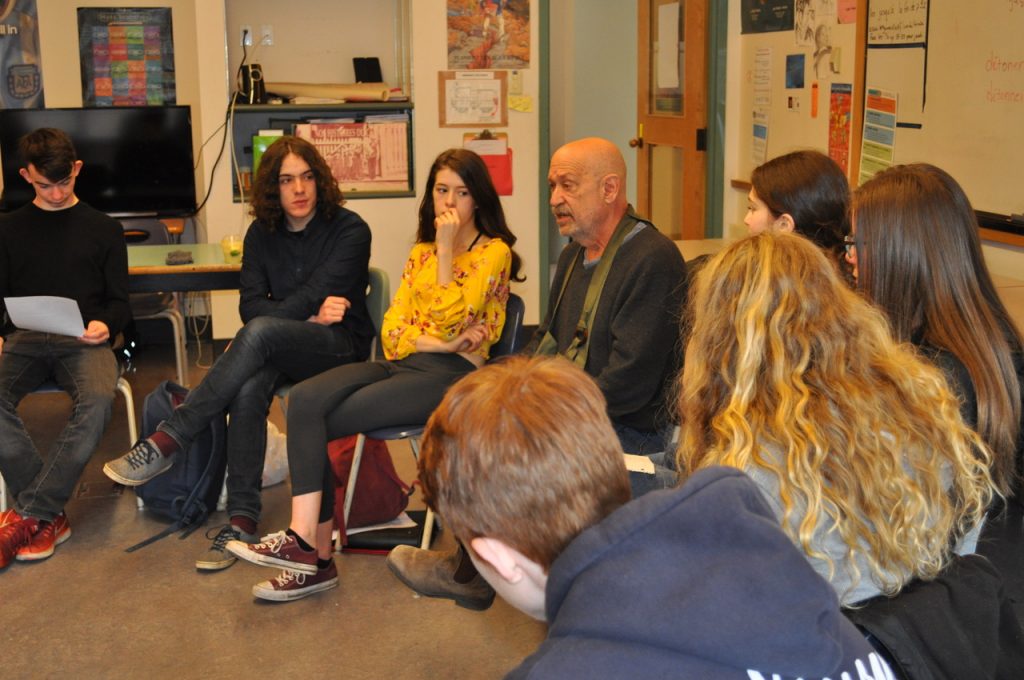
At the root of it, the club aimed to empower individuals to understand people who seemed different from them, approach them with curiosity and empathy, and to use their voice to speak out against injustice. Those who attended events at the World Religions and Culture Club left with a greater capacity to practice these social-emotional skills.
I have taken these lessons with me when I have encountered further instances of prejudice, either directed towards me or someone in my presence. In those moments, I have felt a sense of courage to use my voice instead of staying silent.
Sometime later, I approached the boy who made the comment about the chef’s hat. With composure and kindness, I told him how his comments had affected me and shared with him the cultural significance of the Kippah, the head covering that is not a hat at all, but a sign of respect for God during prayer for many religious Jews.
His response was quite unexpected. He told me that he himself was Jewish! He had been unaware of the harm that he had caused and apologized. We laughed it off and have remained on good terms. I was fortunate that we were both able to lead with curiosity and compassion for one another to come to a place of commonality despite our differences.
Adele Mark is a fourth-year undergraduate student studying Sociology and Global Development Studies at the University of Victoria. She was involved in the Pass It On program in high school at Gulf Islands Secondary School. She has held a student work position with The Circle Education since 2021.