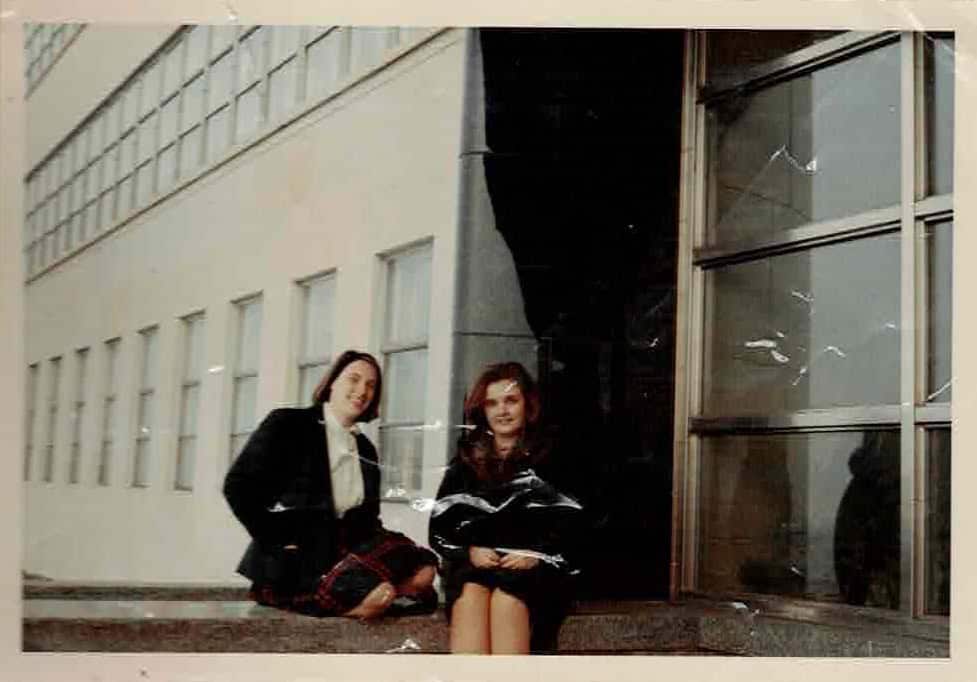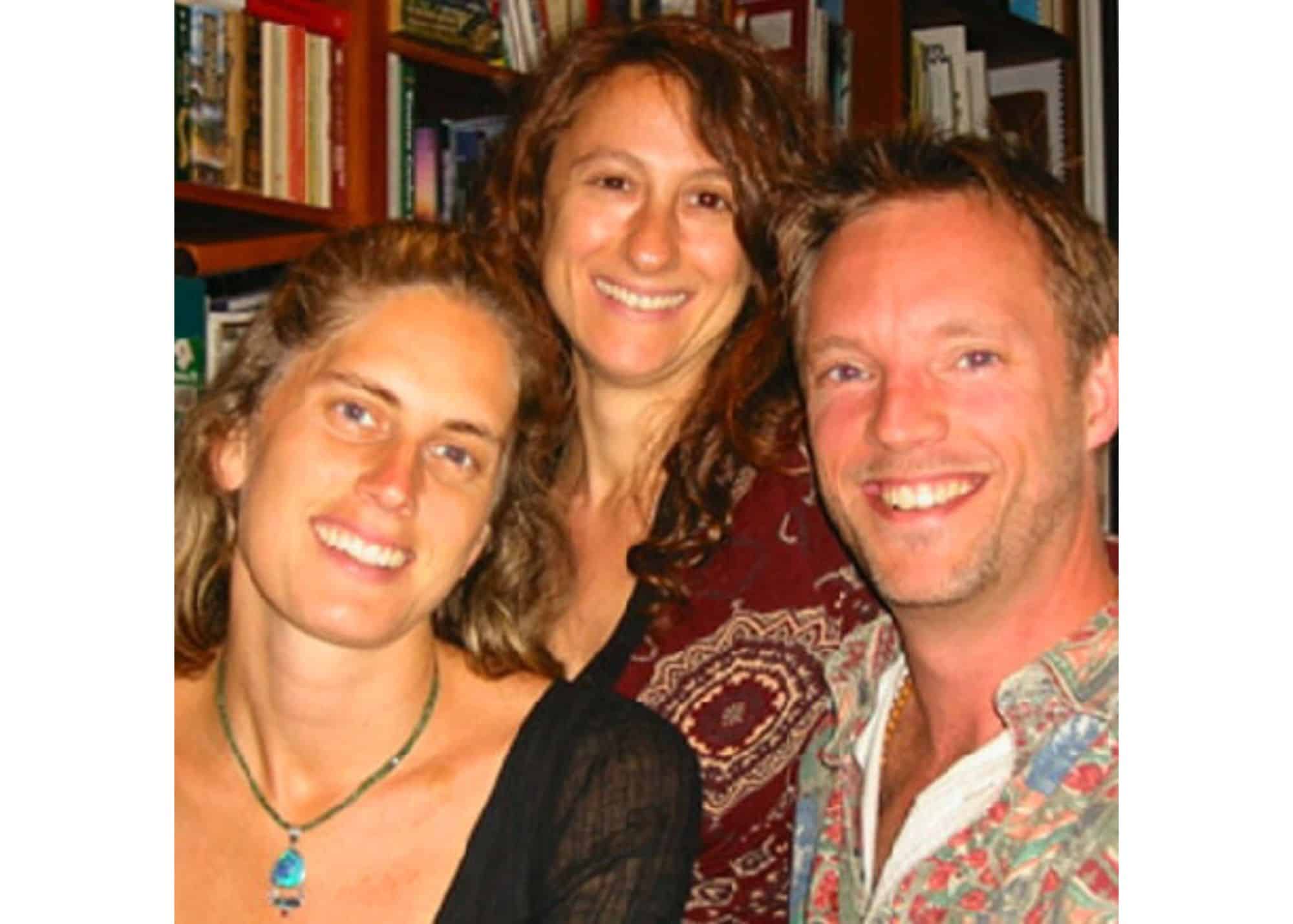

36 years ago, on December 6th, 1989, fourteen young women were murdered at the École Polytechnique de Montréal because a man believed they didn’t belong there. Salt Spring Island resident Lucie Wheeler, the first female refinery engineer for Shell Canada, graduated from the prestigious engineering school in Montreal eighteen years earlier. Leading up to the December 6th Memorial, she looks back on her pioneering years in a male-dominant environment and the violent, misogynistic act that shook our country.
“Are you sure you’re in the right faculty?” It was one of the first things Lucie Wheeler, now 76, heard when she started at École Polytechnique de Montréal in 1966. It wasn’t the first time she had been questioned for her desire to be an engineer. Her parents expected her to study medicine or law, and when she told them she wanted to do engineering, they said, ‘Well, that is not something a woman does, is it?’ ‘So what?’, Lucie replied. And that was that. “I went into Polytechnique, and my parents supported me all the way.”
Lucie was interested in engineering from an early age. Her parents had a cottage on a lake in Quebec. When people came to visit and the oil pans in their car sprang a leak on the dirt roads leading towards the lake, young Lucie could be found underneath the vehicle, fixing the problem. “I think I might have been ten, eleven years old,” she says in looking back. “I was fascinated by engines.”
In the year before her graduation in 1971, the university hosted an open house for managers of companies operating in the Montreal area. Lucie, who was on the student council, was leading a group of guests to the chemical engineering department. “When we were in the elevator, a representative of Shell Canada asked me what a nice girl like me was doing in a place like this.”
She answered that she was learning to be a refinery engineer, but he told her right there that that wasn’t possible. “He was worried that my long hair would get caught in the machinery and that I couldn’t climb up the equipment that can be 250 ft high. I had been in gymnastics, and I told him with a smile, that my hair could be combed up and that I could probably climb ladders faster and safer than he could.”
Lucie needed work experience, and she offered to work for free in the summer, only to get paid if they were convinced that she was the best summer student they’d had that year. “When the manager of process engineering heard that a girl got the job, his first reaction was: ‘We absolutely don’t need that’”, she looks back. “They’d put me to the test, giving me difficult tasks and letting me work in extremely hot temperatures, but I persevered. I showed them women had a place there and could wear steel-toed boots and hard hats, just like men.”
After three months, she was paid. Of course. And the manager who said she wasn’t the right person for the job was impressed in more than one way. “I ended up marrying him,” she says with a smile.
Lucie worked as an engineer for Shell Canada until she had her first child in 1974. In the years after, she raised her three children, plus two children whom she adopted with help from her parents from Vietnam when she was just eighteen. From home, she kept working and translated technical manuals in French and English. In 1990, she and her husband, Charlie, started their own company, CJ Wheeler Process Consultant, focusing on finding ways for companies to make money while being better for the environment. In 2010, when Charlie retired, Lucie and her brother formed Sweet Gasoil, a company focused on finding solutions for waste plastics and waste and used oils. She retired at 75, in the summer of 2024, and during her career, she became the primary inventor or co-inventor on 25 patents and 16 additional outstanding patent applications.
While taking care of six kids at home in Calgary in 1989, Lucie heard about the attacks in Montréal. “I was shocked,” she says. “The murderer hated feminists and thought that the women took his place at Polytechnique. That was not far removed from the attitude a lot of men had when I was in school. Not a lot had changed since then. We didn’t take anyone's place; we just got in because we had good, or even exceptional, marks. We had every right to be there.”
Fifty-three years after graduating from Polytechnique de Montréal and becoming the first female refinery engineer at Shell Canada, Lucie doesn’t see herself as a trailblazer. When she was asked to come to Montréal to speak at the memorial service for the victims, she politely said no. “They said those women were following in my footsteps, but they weren’t. They were smart and determined enough to be there on their own merits. They were following their own path. I was a stranger to them, so I didn’t think it was appropriate for me to speak there.”
Lucie pursued her goal of becoming an engineer in a time when women in engineering were rare. Now, many years later, women remain significantly underrepresented in engineering jobs. Lucie says she hopes that young girls keep following their own path. “They should be whatever they want to be, and strive to use their gifts to be useful and successful human beings. Not because they're girls, but because they're human.”